

Can Cryo Activate Brown Fat For Weight Loss?
Can cryo activate brown fat for weight loss? I hear that question all the time in clinics like mine – and here at The Facial Hub, we get a lot of curious clients from Brisbane wondering whether cold exposure actually helps with fat loss, or if it’s just the latest fad with a pretty marketing spin. If you’ve ever searched for cryotherapy near me, you’ll know you’re not alone. This treatment has been gaining popularity as people get more serious about taking care of their metabolic health.
So let’s dive into what’s really going on in our bodies – from brown fat cells to metabolic rates – and where cryotherapy fits into the picture.

Contents
- 1 Cold Therapy And Fat Metabolism
- 2 How Your Body Uses Energy In Cold Conditions
- 3 The Real Impact On Body Composition And Fat Loss
- 4 How Cryotherapy Compares To Proven Fat Loss Strategies
- 5 What Your Body Experiences During A Session
- 6 Benefits Clients Notice Beyond The Scales
- 7 Who Tends To See The Best Results
- 8 Safety, Protocols, And What To Know Before You Book
- 9 A Clear Perspective On Results And Expectations
- 10 So… Is It Worth Trying?
- 11 Final Thoughts — And A Gentle Invitation
- 12 FAQ
- 12.1 How often should you come in for a session?
- 12.2 Will this treatment get rid of that stubborn fat just around your stomach or thighs?
- 12.3 Is this treatment as good as a tough workout for burning calories?
- 12.4 Can this treatment really support your long-term metabolic health?
- 12.5 Who should give cryotherapy a miss?
Cold Therapy And Fat Metabolism
Cryotherapy might be intense, but your body’s wired to respond to cold in a pretty intelligent way. Whether it’s a cryotherapy chamber, an ice bath or even just a cold shower, your body activates the emergency routes it takes to keep your core temperature stable and your energy levels up.
This involves tapping into your adipose tissue – the stuff you store as fat – and the difference between white fat (which stores energy) and brown fat (which burns energy). That’s where fat loss gets interesting, but also where expectations need to be kept in check.
How Your Body Uses Energy In Cold Conditions
Brown fat is a special type of fat that burns energy rather than storing it. It’s got loads of mitochondria, which let it convert fatty acids into heat through a process called non-shivering thermogenesis.
How Your Body Responds To Cold Exposure
When your body experiences cold-induced thermogenesis:
- The sympathetic nervous system kicks in
- Your blood vessels constrict to help keep your core from getting too cold
- Your brown fat increases its energy expenditure
This leads to a noticeable increase in your calorie burn – but not a drastic enough change to replace proper diet and exercise for weight loss.
The Real Impact On Body Composition And Fat Loss
There’s a lot of hype online about fat loss quick-fixes, so let’s get back to reality.
What The Research Suggests (As Of 2026)
Emerging data is showing that cold exposure can:
- Improve your metabolic rate and support your metabolic health
- Increase your daily energy expenditure by around 100–300 calories
- Enhance your insulin sensitivity, which plays a role in managing things like type 2 diabetes
There’s also some research showing that cold-induced thermogenesis is linked to improved lipid oxidation and reduced systemic inflammation, both of which contribute to overall health rather than a fast aesthetic change.
What This Means For Visible Results
From what I’ve seen in the clinic, cryotherapy helps with fat mobilisation, making your body more efficient at using stored energy. However, it won’t directly reduce subcutaneous fat or visceral fat, and it won’t make a significant dent in waist circumference or body mass index on its own.
How Cryotherapy Compares To Proven Fat Loss Strategies
To give you a realistic perspective, here’s how cryotherapy compares to other approaches:
| Method | Primary Effect | Calorie Impact (Approx.) | Best For |
|---|---|---|---|
| Cryotherapy | Brown fat activation, cold-induced thermogenesis | 100–300 kcal/day | Recovery, metabolic support |
| Resistance training | Muscle growth, higher metabolic rate | Long-term increase | Body recomposition |
| Cardio exercise | Direct calorie burn | 200–600 kcal/session | Fat loss, cardiovascular health |
| Diet changes | Energy balance control | Highest impact | Sustainable fat loss |
Takeaway: Cryo supports fat metabolism — but it doesn’t replace diet changes or movement.
What Your Body Experiences During A Session
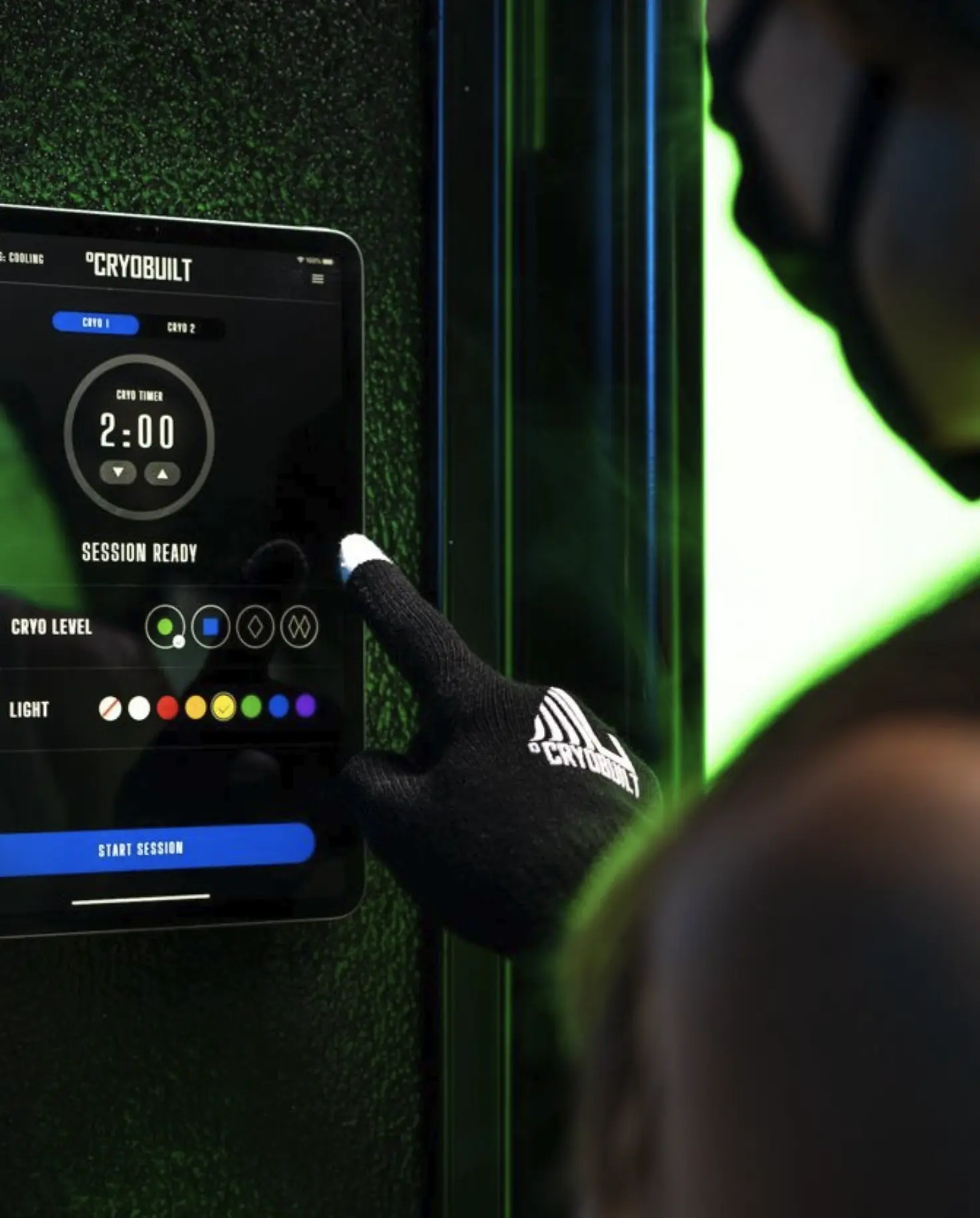
When you’re in a whole-body cryotherapy session, your body gets hit with sub-zero temperatures, and it has a few things to do to keep itself from getting too chilly. It redirects blood flow away from the skin & that way you don’t freeze your internal organs, and as soon as you warm back up, there’s a big rush of oxygen-rich blood making its way back through the system.
That rebound effect can really help out with vascular flexibility, works wonders for recovering from muscle soreness, and starts processes in your body that boost your metabolic efficiency – things like glucose transporter activity. That’s one of the reasons you might find you have a bit of an energy boost after the session, a lot of athletes and busy bees alike swear by it.
Benefits Clients Notice Beyond The Scales
Now at The Facial Hub, we don’t hear all that much about people losing a bunch of weight – what we really hear about is how the treatment makes people feel afterwards.
Most people can notice a reduction in muscle soreness, a better recovery time, and less systemic inflammation. People managing chronic conditions like rheumatoid arthritis can find that helpful, and we also hear about people getting improvements in their energy levels, which is likely connected to improved insulin sensitivity and lower oxidative stress.
From a skin point of view, the increased circulation from the treatment can be really helpful for collagen production and reducing fluid retention, which is something I see a lot of in Brisbane with people dealing with humidity-related puffiness.
Who Tends To See The Best Results
Not everyone is going to respond the same way to whole-body cryotherapy, and this is where having some realistic expectations is really important.
Factors That Influence Outcomes
- People with already a decent level of metabolic health tend to respond better
- People combining cryo with some changes to their diet often do better
- Consistency counts – having the odd session isn’t going to do much
- People with visceral fat or metabolic syndrome may benefit more from improved insulin sensitivity
Safety, Protocols, And What To Know Before You Book
Whole-body cryotherapy is safe if it’s done right, but it does need the proper protocols and a professional to supervise.
The sessions are kept short, usually 2 or 3 minutes – and that’s to prevent issues like skin irritation. We always make sure to use the right protective gear, and we do some careful screening before letting anyone in for a session – especially people with cardiovascular conditions like ventricular arrhythmia.
A Clear Perspective On Results And Expectations
Let’s cut through the noise:
- Cryotherapy gets your brown fat ticking over – and that can be a good thing.
- This can boost your energy levels and burn calories a bit faster – but not drastically.
- It also helps to get your metabolism working smoothly – but don’t imagine it as a silver bullet.
But don’t get your hopes up:
- It doesn’t directly get rid of fat cells and it’s not a replacement for anything like surgery.
- It also won’t change your waist size or body mass index on its own.
Think of cryo as a way to give your metabolic system a bit of a kick, not as a quick fix for weight loss.
So… Is It Worth Trying?
If you’re dead set on losing weight, then your priorities should be getting a consistent training routine and a healthy diet – that’s where the real changes happen.
But if recovery, improved health and reducing inflammation are your goals, then cryotherapy can be a good addition to your routine. We get a lot of people coming to us after searching for ‘cryotherapy near me‘, and it’s the overall benefits that keep them coming back, not just seeing a number drop on the scale.
Final Thoughts — And A Gentle Invitation
Cryotherapy operates in a bit of a grey area between science and wellbeing – but when used right, it can definitely do some good for your body. But to get the most out of it, you need to be using it as part of the bigger picture, which is a healthy diet, regular exercise and good recovery.
FAQ
How often should you come in for a session?
To get the most out of it, most people find that 2 – 3 sessions a week is a good place to start – although it all depends on your lifestyle and what your body is telling you it can handle.
Will this treatment get rid of that stubborn fat just around your stomach or thighs?
No – it just doesn’t work that way – it works all over the body.
Is this treatment as good as a tough workout for burning calories?
Not quite – exercise still usually wins out when it comes to burning calories and creating a calorie deficit.
Can this treatment really support your long-term metabolic health?
Absolutely – especially when it comes to improving your insulin sensitivity and reducing inflammation if you stick at it.
Who should give cryotherapy a miss?
If you’ve got certain heart problems or are sensitive to extreme cold, then seek some advice from a doctor first.
